Canada’s travel advisory level for Mexico
Canada’s Travel Advice and Advisories use four levels, from take normal security precautions and exercise a high degree of caution to avoid non-essential travel and avoid all travel. Mexico as a whole sits at level two, exercise a high degree of caution. That means there are certain safety concerns and the situation could change quickly.
On top of that, there are regional advisories at the “avoid non-essential travel” level. As of November 25, 2026, no region is at the highest level, “avoid all travel.” Because these levels change, check the official Mexico travel advice page before booking and again before you leave. That page is the authority, not this guide.
The Mexican states Canada advises against
Here is the list as published on November 18, 2026, due to high levels of violence and organized crime:
- Chiapas, excluding the city and ruins of Palenque (and highway 186 leading there), the city of Tuxtla Gutiérrez (with its airport and the main road leading there) and San Cristóbal de las Casas (with toll highway 190D to Tuxtla Gutiérrez)
- Chihuahua, excluding Chihuahua City
- Colima, excluding Manzanillo, only if accessed by air
- Guanajuato, in all areas south of and including highways 43D and 45D
- Guerrero, excluding Ixtapa and Zihuatanejo, only if accessed by air (so Acapulco is not excluded)
- Jalisco, within 50 km of the border with Michoacán, excluding Mazamitla (and highway 405 leading there) and the area around Lake Chapala between highways 15 and 15D
- Morelos, only Lagunas de Zempoala National Park
- Michoacán, excluding Morelia and Pátzcuaro
- Nayarit, within 20 km of the border with Sinaloa and Durango
- Nuevo León, excluding the city of Monterrey
- Sinaloa, excluding Los Mochis and specific areas of Mazatlán (Centro Histórico south of Avenida Gutiérrez Nájera, the road to the airport, the coastal roads to Playa Delfines including Zona Cerritos and the Golden Zone, and the resorts on Playa Estrella del Mar), only if accessed by air or sea
- Sonora, excluding Hermosillo, Guaymas/San Carlos and Puerto Peñasco
- Tamaulipas, excluding Tampico, only if accessed by air or sea
- Zacatecas, excluding the city of Zacatecas
Is it safe to travel to Cancún, the Riviera Maya or Puerto Vallarta?
Neither Quintana Roo, home to Cancún and the Riviera Maya, nor Baja California Sur (Los Cabos) is under a regional advisory. In Jalisco, only the 50 km strip along the Michoacán border is affected, and the coast where Puerto Vallarta sits is not part of it. These regions therefore stay at the national level, a high degree of caution.
Mexican authorities have taken steps to protect major tourist destinations, which has reduced gang-related violence there, according to the government. Violent crime still occurs in tourist areas and resorts, though. Clashes between gangs or cartels have also happened in hotels, nightclubs and restaurants, injuring or killing bystanders.
So Canada does not advise against an all-inclusive stay in these regions. The risk is not zero, however, even inside a resort.
Theft, fraud, spiked drinks and other common risks
What the Government of Canada mainly flags is everyday crime, including in tourist areas:
- Pickpocketing and purse snatching, common at airports, bus stations and in crowds.
- Card and ATM fraud. Cover the keypad when entering your PIN and avoid card readers that look unusual.
- Spiked drinks, especially in bars, nightclubs and taxis hailed on the street. Never leave your drink unattended, and order sealed bottles or cans.
- Unregulated alcohol. Some bars, restaurants and resorts have served it, and travellers have reported getting sick or blacking out. Buy alcohol from reputable places and get medical help if you feel ill.
- Virtual kidnappings. Criminals call hotel rooms pretending to be a relative, so never share your room number or plans.
- Police corruption. If an officer demands cash, don’t hand over money or your passport, note their badge number and ask for a written ticket.
Taxis, transportation and ATMs, the habits that help
Stick to official taxis or reputable ride-sharing apps, and avoid hailing taxis on the street. Express kidnappings, where victims are forced to withdraw cash, sometimes involve fake drivers. At the airport, if you pay by card, book and pay for your taxi inside the terminal or at the designated stand. Carry small bills, too.
When you need cash, use an ATM inside a bank or a business rather than in public areas of the airport, because criminals sometimes follow people who have just withdrawn or exchanged money. If you drive, do it in daylight and on toll highways (numbers ending in “D”).
Beaches, swimming and balconies, the risks people underestimate
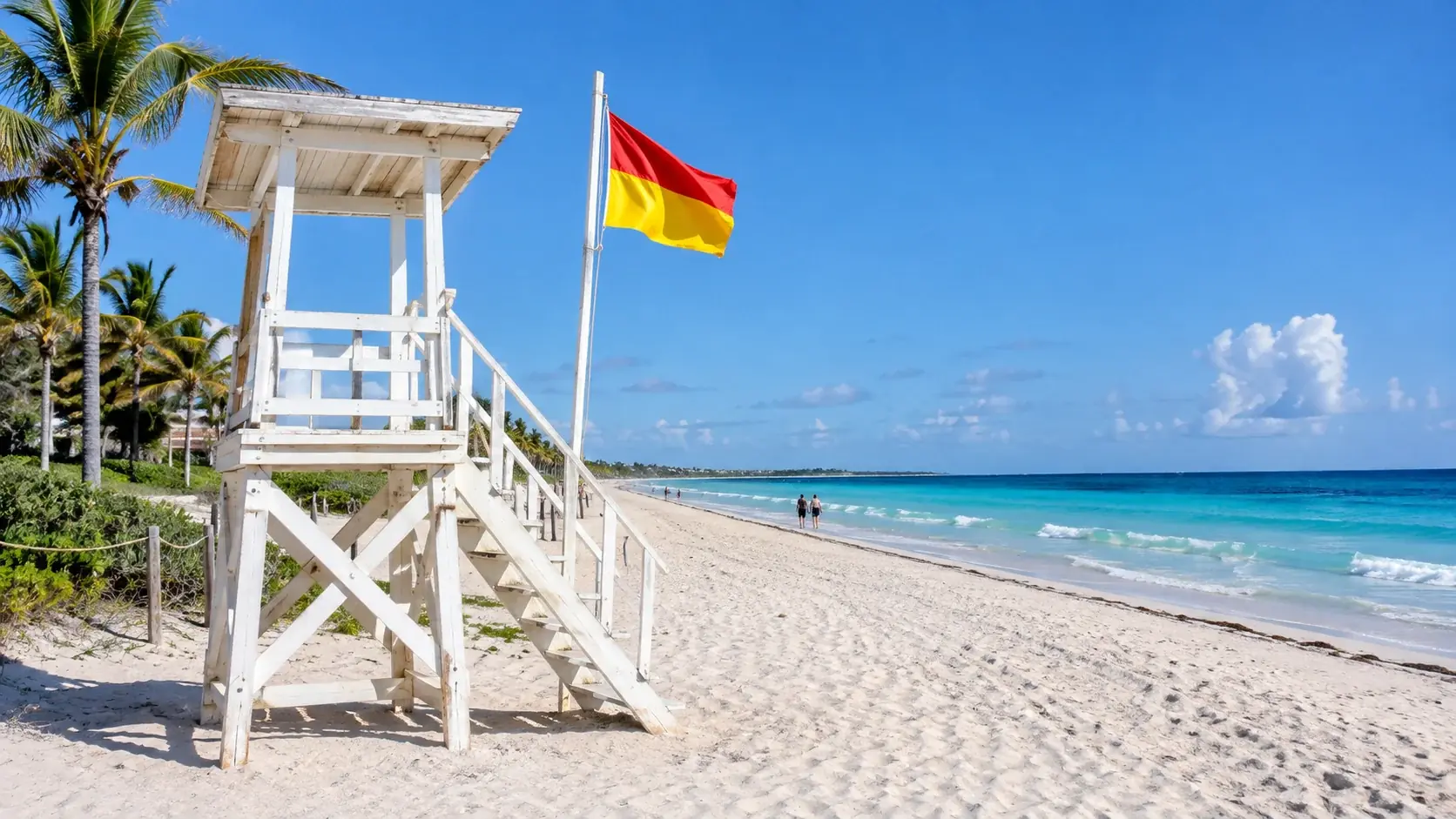
Riptides are common and several drownings occur every year. Canada’s advisory points out that beaches are not always supervised, lifeguard services do not always meet Canadian standards and many beaches don’t have warning flags. No flag, then, does not mean the water is safe. Ask your hotel, swim in designated areas and follow local instructions.
Balconies are easy to overlook. In Mexico, railing height standards are much less strict than in Canada, and people have been injured or killed in falls. As for hurricane season, it runs from early June to the end of November in the Atlantic and the Caribbean, and from mid-May to the end of November in the Pacific. Our when to go to Mexico page explains how to plan around it.
What should you do before you leave and in an emergency?
Before you go, sign up for the free Registration of Canadians Abroad service so the government can reach you in an emergency or natural disaster. Get travel insurance that covers hospital stays and medical evacuation, since private hospitals in Mexico usually require payment up front. Read the fine print, because many policies won’t cover regions under an “avoid non-essential travel” advisory. For your documents, see our passport and entry guide.
Once in Mexico, dial 911 for any emergency. Victim of a crime? File a complaint in person at the prosecutor’s office (Ministerio Público or Fiscalía) before leaving the country, since insurers usually require that report. The Emergency Watch and Response Centre in Ottawa answers 24/7, toll-free from Mexico at 001-800-514-0129. These are the Canadian offices most useful to vacationers:
| Office | Phone | Area served |
|---|---|---|
| Embassy of Canada, Mexico City | +52 55-5724-7900 | Mexico City and 19 states, including Oaxaca, Puebla and Veracruz |
| Consular agency, Cancún | +52 55-5724-9795 | Campeche, Yucatán and northern Quintana Roo (Puerto Morelos, Isla Mujeres, Holbox) |
| Consular agency, Playa del Carmen | +52 55-5724-9796 | From Playa del Carmen to Chetumal, including Cozumel |
| Consular agency, Puerto Vallarta | +52 55-5724-9799 | Jalisco coast, Colima and Nayarit |
| Consular agency, Cabo San Lucas | +52 55-5724-9797 | Baja California Sur |
Frequently asked questions
Is Mexico dangerous for Canadian tourists?
Canada asks travellers to exercise a high degree of caution throughout Mexico due to crime and kidnapping. It also advises against non-essential travel to parts of 13 states. Cancún, the Riviera Maya, Los Cabos and Puerto Vallarta are not covered, although violent crime does occur there too.
Is Cancún in an area to avoid?
Not under the current advisory. As of November 18, 2026, Quintana Roo, where Cancún is located, is not one of the regions where Canada advises against non-essential travel. The national high-caution level applies.
Does Canada advise against Acapulco?
It does. Guerrero is under a regional advisory, and only Ixtapa and Zihuatanejo are excluded, provided you arrive by air. That puts Acapulco in the area where Canada advises against non-essential travel.
Is it safe to drink the alcohol at all-inclusive resorts?
Some resorts have served unregulated alcohol, the Government of Canada reports. Its advice is to drink at reputable establishments and seek medical help at the first sign of feeling unwell.
What number do you call in an emergency in Mexico?
911, just like in Canada. To reach the Government of Canada at any time, the Emergency Watch and Response Centre is toll-free from Mexico at 001-800-514-0129.
Does my travel insurance cover me everywhere in Mexico?
Not necessarily. According to the Government of Canada, many policies don’t cover regions under an “avoid non-essential travel” or “avoid all travel” advisory. Go through your policy’s terms before you book.
Sources consulted
- Conseils aux voyageurs pour le Mexique, gouvernement du Canada (mis à jour le 18 novembre 2026)
- Mexico travel advice, Government of Canada (updated November 18, 2026)
- Inscription des Canadiens à l’étranger, gouvernement du Canada
- Registration of Canadians Abroad, Government of Canada
- Assurance interruption de voyage et assurance maladie de voyage, gouvernement du Canada
- Trip interruption and travel health insurance, Government of Canada